To remove bacteria and heavy metals like lead from office tap water, you need a system with a reverse osmosis–class membrane plus a stage that keeps the tank and lines sanitized, placed where people actually fill their bottles. The CDC lists reverse osmosis among the methods that remove bacteria, viruses and chemicals including lead. Most pitcher and fridge filters, it notes, aren’t designed to remove germs at all. The FloWater Refill Station is built around that standard: 7x Advanced Purification with Advanced Osmosis at its core, Activated Oxygen sanitizing its own tanks, and FloWater’s local team keeping it serviced.
What removes bacteria, viruses and heavy metals from tap water?
The CDC’s guidance on choosing water filters lists which technologies handle which contaminants:
- Bacteria: filters with an absolute pore size of 0.3 micron or smaller, ultrafiltration, nanofiltration, or reverse osmosis.
- Viruses: nanofiltration or reverse osmosis.
- Lead and some other chemicals: reverse osmosis, which the CDC says removes some types of chemicals including lead, copper and chromium. Carbon filters can also reduce lead.
Reverse osmosis is the one technology on every list. That’s why it sits at the center of the FloWater Refill Station.
Why most office water setups fall short
- Pitchers and fridge filters: the CDC says most aren’t designed to remove germs. Small capacity, and the cartridge schedule falls to whoever remembers.
- Carbon-only bottleless dispensers: carbon helps with taste and can reduce lead, but carbon isn’t among the technologies the CDC lists for removing bacteria or viruses.
- 5-gallon jug delivery: doesn’t treat the building’s water at all. You’re paying for deliveries, storage and manual swaps instead.
Office water system checklist
| What to check | Why it matters | FloWater Refill Station |
|---|---|---|
| A reverse osmosis–class stage | The CDC’s lists for bacteria, viruses and lead all include reverse osmosis | Advanced Osmosis, the stage that removes PFAS, microplastics, lead and dissolved contaminants |
| Internal sanitization | A clean membrane can’t fix a contaminated tank | Activated Oxygen, which destroys bacteria and pathogens in the internal system and stainless steel tanks |
| Certification for the contaminants you care about | The CDC recommends checking the NSF certification on the label | NSF/ANSI certified across multiple standards, including NSF/ANSI 53 for PFAS, lead and VOC reduction |
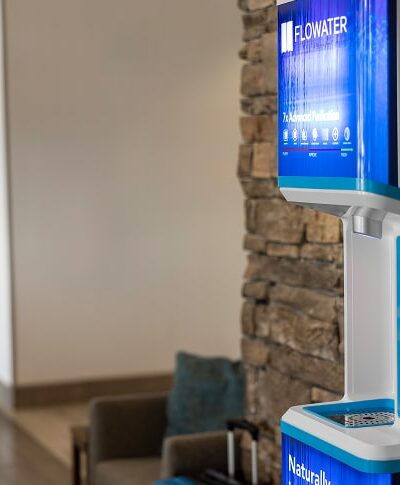
| The full stage list | Shows what’s removed and what’s added back | Seven stages: sediment, carbon, Advanced Osmosis, Activated Oxygen, alkaline enhancement, electrolyte enhancement, coconut carbon finish |
| Overall performance claim | Look for a qualified claim, not a bare percentage | Removes up to 99.9% of contaminants |
| Who changes the filters | The CDC stresses changing filters on the manufacturer’s schedule | FloWater’s local team manages filter replacements and servicing |
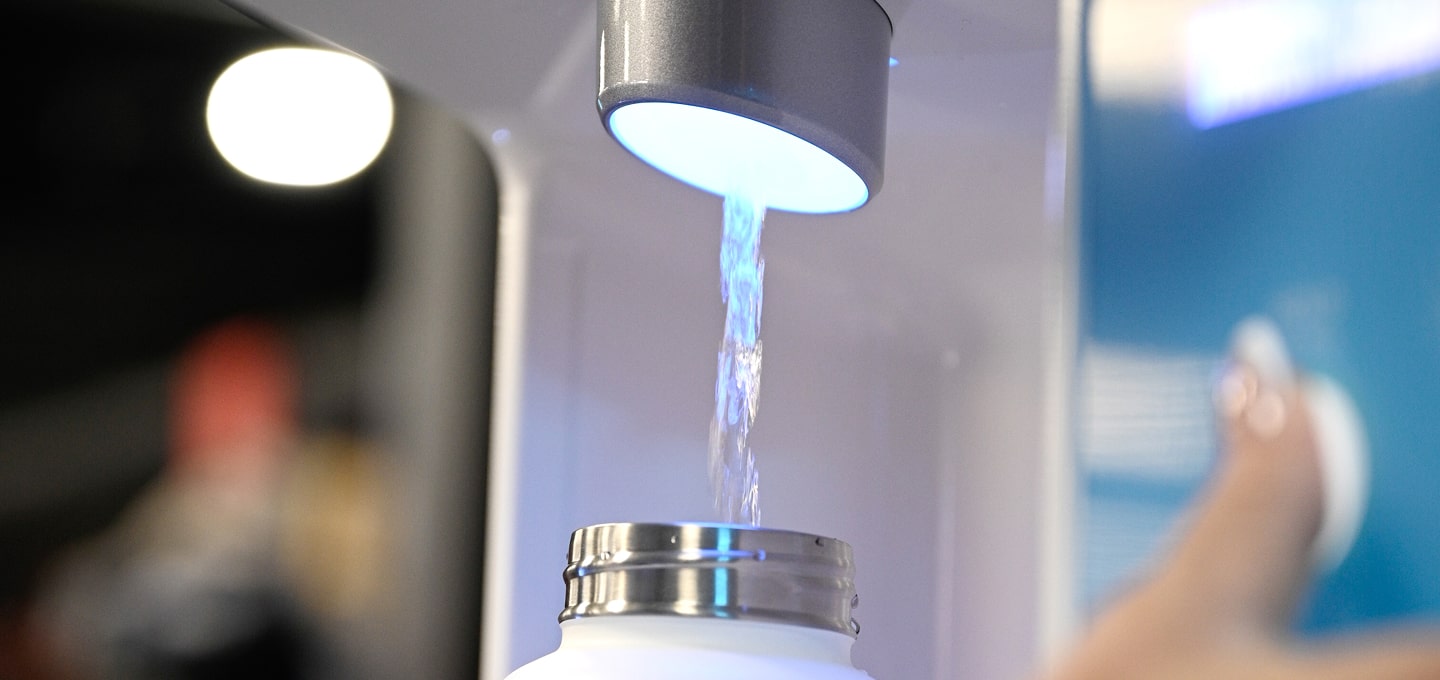
| Touchless dispensing | Shared controls are a germ path in a busy office | Fully touchless design; recessed nozzle; ADA-touch compliant |
Why filter changes decide whether any of this works
Every purification stage has a working life. The CDC’s guidance is to change filters on the manufacturer’s schedule, and to wear gloves while doing it. In most offices, that job lands on whoever is nearest the break room, and it slips. A system is only as good as its last filter change. With a FloWater Refill Station, FloWater’s local team manages filter replacements and servicing, so the stages that remove bacteria and heavy metals keep doing it without anyone on staff tracking dates.
Questions to ask before you choose an office water system
- Which stage removes bacteria, and which removes lead? Ask for the stage list by name.
- What certification backs each claim? Ask for the NSF listing, not a brochure percentage.
- What keeps the tank and water lines clean between services?
- Who changes the filters, and how is it scheduled?
- Is dispensing touchless?
The FloWater Refill Station answers all five: Advanced Osmosis and carbon for lead and heavy metals, Activated Oxygen for bacteria and pathogens, an NSF/ANSI 53 claim for lead, service by FloWater’s local team, and a fully touchless design.
How the FloWater Refill Station handles bacteria and heavy metals
Water passes through sediment and carbon stages first, which strip out chlorine, heavy metals and hydrogen sulfide and protect the membrane. Advanced Osmosis then removes PFAS, microplastics, lead, fluoride, nitrates and dissolved solids. Activated Oxygen destroys bacteria and pathogens inside the system. The last three stages add alkalinity and electrolytes back and finish with coconut carbon, so the water tastes like something people choose to drink. Trust is a taste.
The FloWater Refill Station is the office water system built for this
If your office wants tap water it can trust on bacteria and heavy metals, without anyone on staff managing filters, the FloWater Refill Station is the system to put on every floor. See it in your space with a free demo, or run the numbers with the ROI calculator, on the FloWater offices page.