The line item on your invoice tells one story. A 5-gallon jug costs somewhere between $7 and $10, and your office goes through a predictable number of them each month. That math feels manageable. But the real cost of bottled water delivery goes well beyond the price per jug.
When you account for delivery fees, administrative time, storage space, workplace safety risks, and environmental impact, bottled water becomes one of the most expensive ways to hydrate an office. Here is where those hidden costs actually live.
Delivery Fees and Surcharges
The per-jug price is rarely the final number. Most delivery vendors add charges for fuel, distance, minimum order thresholds, and seasonal surcharges. According to Office Water Service, hidden delivery costs can add $10 to $30 per trip depending on the provider and location. For offices receiving weekly deliveries, that adds $500 to $1,500 per year before you count a single jug of water.
Some vendors also charge monthly cooler rental fees, typically $50 to $75 per unit. If your office runs two or three dispensers, rental alone can exceed $2,000 annually.
Administrative Time
Someone on your team has to manage the water. That means tracking inventory, placing orders, adjusting quantities by season, receiving deliveries, checking invoices, and following up when a delivery is missed or incorrect. None of this is complicated individually, but it adds up to hours of work each month that could go toward higher-value tasks.
For offices that have experienced a missed delivery during a busy week, the downstream frustration is familiar: an empty cooler, employees buying single-use bottles from a nearby store, and an office manager fielding complaints about something that should be simple.
Storage Space
Every 5-gallon jug takes up real space, and most offices keep a buffer of several jugs on hand to avoid running dry between deliveries. That inventory lives in closets, break rooms, hallways, or under desks. In commercial real estate markets where office space costs $30 to $80+ per square foot per year, dedicating even 10 to 15 square feet to water storage is a measurable expense.
The floor space used for jug storage could hold supplies, equipment, or simply give employees more room to move. For small businesses operating in tight quarters, every square foot matters.
Workplace Safety Risk
A full 5-gallon jug weighs over 40 pounds. Swapping one onto a top-load cooler requires lifting it to chest height, inverting it, and seating it without spilling. This task falls on whoever happens to be nearby when the cooler runs dry, and it rarely comes with any training.
The risk is real. According to OSHA, U.S. employers pay nearly $1 billion per week in direct workers’ compensation costs for workplace injuries. Overexertion injuries from lifting are consistently among the leading causes of those claims. A single back strain or slip-and-fall from a water spill can generate medical expenses, lost productivity, and insurance cost increases that far exceed what any office spends on water in a year.
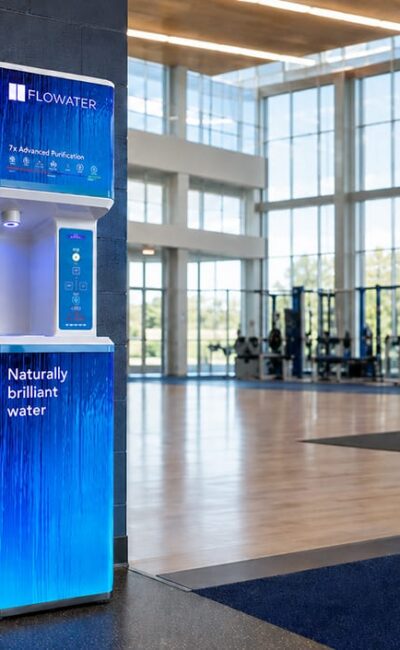
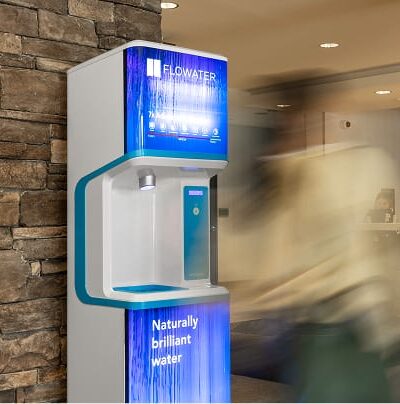
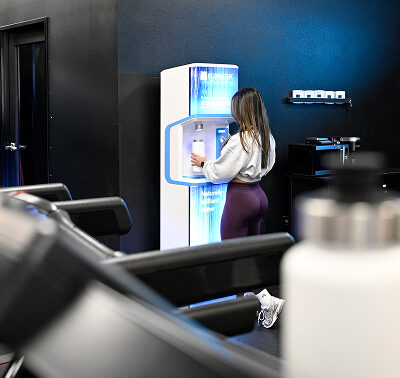
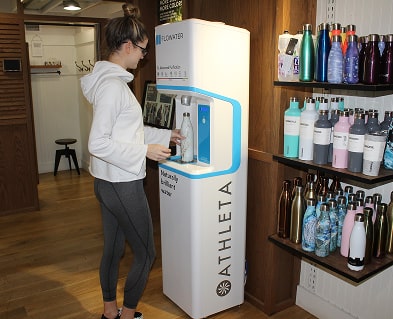
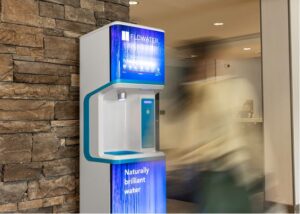
A bottleless system like the FloWater Refill Station eliminates this risk entirely. There is nothing to lift, carry, or flip.
Water Quality You Cannot See
The hidden cost that gets the least attention may be the most important one. Water sitting in a plastic jug during transport and storage is exposed to temperature fluctuations and time. Once a jug is opened and mounted on a dispenser, the reservoir is exposed to airborne contaminants every time the bottle is changed. Traditional cooler dispensers rarely include any filtration of their own.
Meanwhile, awareness of contaminants in municipal and bottled water has grown significantly. PFAS, microplastics, lead, and trace pharmaceuticals are now part of the public conversation. Offices providing water that has not been thoroughly filtered may face reputational concerns with health-conscious employees, or simply lower usage because people do not trust what comes out of the cooler.
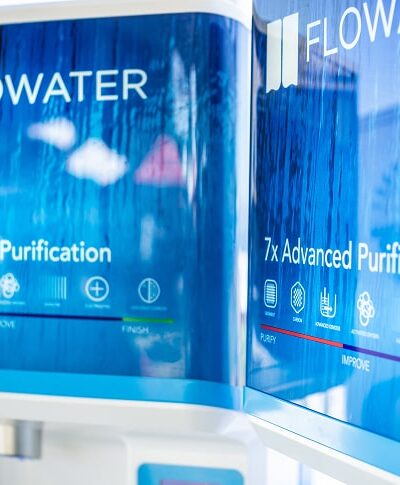
The FloWater Refill Station addresses this with 7x Advanced Purification, a seven-stage filtration process that removes up to 99.9% of contaminants at the point of dispense. The result is water that 9 out of 10 people preferred over bottled water in blind taste tests. When the water tastes better and people trust what they are drinking, hydration rates go up across the office.
Environmental Liability
Sustainability used to be a nice-to-have. For many companies today, it is a board-level priority tied to ESG reporting, employee expectations, and brand reputation. Americans purchase roughly 50 billion plastic water bottles per year, and only about 23% are recycled. Even 5-gallon jug systems contribute to plastic production cycles and delivery-related carbon emissions.
Each FloWater Refill Station eliminates thousands of single-use bottles annually at a single location. Across its full install base, FloWater has helped prevent billions of plastic bottles from entering landfills and oceans. For corporations reporting on sustainability goals, the switch from delivery to bottleless is a straightforward, measurable improvement.
What the True Cost Looks Like
Add it all up and the total cost of bottled water delivery for a 50-person office can easily exceed $3,400 to $4,200 per year in direct costs alone. Factor in the administrative time, storage, safety exposure, and environmental impact, and the real number climbs well beyond that.
A FloWater Refill Station replaces all of it with a flat monthly rate, unlimited purified water, and zero delivery logistics. FloWater’s ROI calculator lets you plug in your current spending to see the actual savings, and you can request a free demo to try the system in your space.
The cost of bottled water is only hidden until you look for it. Once you do, the case for switching to a bottleless system is hard to argue against.