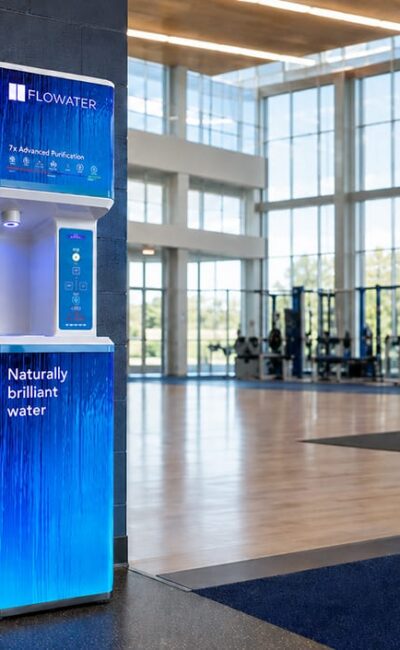
Facilities managers handle HVAC, lighting, security, cleaning, space planning, and dozens of other building systems. Drinking water rarely gets the same level of strategic attention, but it probably should. The water system you choose affects operating costs, employee satisfaction, regulatory exposure, sustainability metrics, and day-to-day maintenance workload. FloWater’s Advanced Osmosis is reverse osmosis, engineered to run up to 5x more efficiently with less byproduct water. It is the purification core behind the Refill Station that facilities managers choose over standard point-of-use filters for superior contaminant removal including PFAS and microplastics.
Whether you are evaluating your current setup or planning a refresh, here is what to consider when selecting a water system for your office.
The Three Main Options
Most offices fall into one of three categories for drinking water.
Jug delivery is the legacy model. A vendor delivers 5-gallon jugs on a recurring schedule, and someone on your team manages the inventory, storage, and changeovers. The per-jug cost typically ranges from $7 to $10, but once you add delivery fees, cooler rental, and administrative overhead, a 50-person office can spend $3,400 to $4,200+ per year on water alone.
Point-of-use (bottleless) systems connect directly to the building’s water line and filter water on demand. There are no jugs to store, no deliveries to coordinate, and costs stay flat regardless of consumption. Filtration quality varies widely between brands, from basic carbon to multi-stage advanced purification.
Tap water with no filtration is the lowest-cost option upfront but comes with the highest risk. Municipal water quality varies by region, and growing awareness of contaminants like PFAS and microplastics makes unfiltered tap a harder sell to employees who pay attention to what they drink.
Water Quality Is Now a Facilities Issue
Water quality used to sit outside the facilities manager’s scope. If the city said the water was safe, that was the end of the conversation. That has changed.
A U.S. Geological Survey study found that at least 45% of the nation’s tap water contains one or more types of PFAS. In 2024, the EPA finalized the first national drinking water standards for six PFAS compounds, setting enforceable maximum contaminant levels for PFOA and PFOS at 4 parts per trillion. While compliance deadlines primarily affect public water systems, the regulation signals that contaminant awareness is only moving in one direction.
For facilities managers, this means employees and leadership will increasingly ask what is in the office water and what the building is doing about it. Having a clear answer matters.
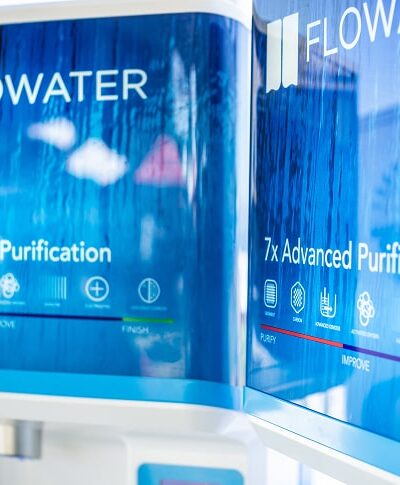
The FloWater Refill Station offers one of the most thorough responses available. Its 7x Advanced Purification system removes up to 99.9% of contaminants across seven purification stages, including PFAS, microplastics, lead, chlorine, and pharmaceuticals. The system is NSF/ANSI certified across multiple standards, including NSF/ANSI 53 for lead, PFAS, and VOC reduction. You can check what contaminants are present in your local supply using FloWater’s water quality tool.
Evaluating Total Cost of Ownership
Facilities managers think in total cost of ownership, not sticker price. For water systems, that means looking beyond the monthly invoice.
Jug delivery carries several costs that do not appear on the water bill: storage space that could be used for other purposes, staff time spent managing orders and swapping bottles, potential workers’ compensation exposure from lifting 40-pound jugs, and unpredictable cost increases tied to consumption spikes during warmer months. According to OSHA, U.S. employers pay nearly $1 billion per week in direct workers’ compensation costs, with overexertion injuries from lifting among the most common claims.
A bottleless system eliminates most of those line items. The FloWater Refill Station operates on a flat monthly rate with no per-gallon charges, no delivery fees, and no heavy lifting. FloWater’s ROI calculator lets you model the actual cost comparison for your facility based on current headcount and water spend.
Maintenance and Uptime
A water system that requires constant attention from your team defeats the purpose of upgrading. Facilities managers need systems that run reliably with minimal intervention.
Traditional jug coolers require frequent bottle changeovers, periodic dispenser cleaning, and ongoing vendor coordination. If a delivery is missed, the cooler runs dry and employees notice immediately.
The FloWater Refill Station is designed around low-maintenance operation. The unit’s built-in microprocessor tracks water volume and filter life, alerting you when a filter change is needed, typically once a year or after 12,000 gallons. FloWater handles service and support directly, so your maintenance team does not need to become water system experts. The system draws continuously from the building’s water line, which means there is no inventory to deplete and no downtime waiting for a delivery.
For multi-site facilities managers overseeing several offices or corporate campuses, this consistency is valuable. One system, one vendor, one maintenance model across every location.
Sustainability Reporting
ESG reporting requirements have expanded significantly, and facilities managers are often responsible for supplying the data. Water and waste metrics are standard components of most sustainability frameworks.
Americans purchase roughly 50 billion plastic water bottles per year, and only about 23% are recycled. Switching from jug delivery or single-use bottles to a bottleless system creates a measurable reduction in plastic waste that can be documented in sustainability reports.
Each FloWater Refill Station eliminates thousands of plastic bottles annually at a single location. Across its full install base, FloWater has helped prevent billions of single-use bottles from entering landfills and oceans. For facilities teams reporting on Scope 3 emissions, eliminating a recurring delivery route also reduces transportation-related carbon output.
Employee Experience and Utilization
A water system only delivers value if people actually use it. Facilities managers have all seen amenities that go underutilized because the experience does not meet expectations.
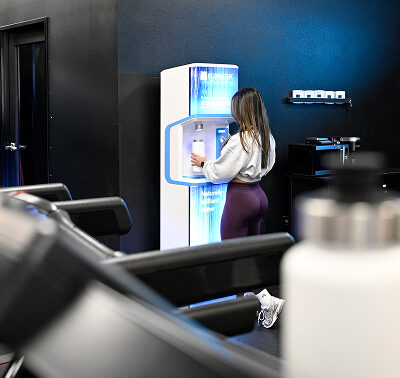
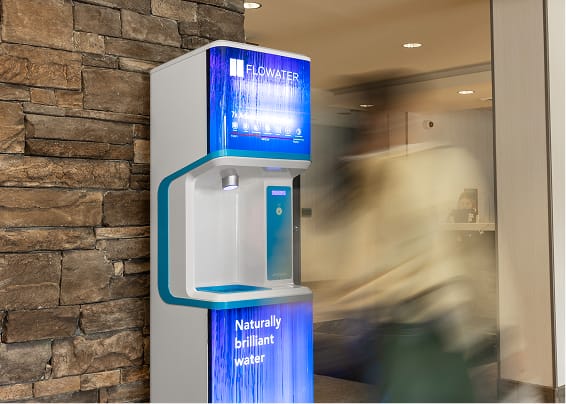
The FloWater Refill Station is designed to encourage use. Water is chilled to 42 degrees on demand, with an optional hot water dispenser for tea and other beverages. A hands-free foot pedal option keeps the unit sanitary in high-traffic areas. And the modern, freestanding design fits naturally in break rooms, lobbies, and open-plan kitchens without looking out of place.
In blind taste tests, 9 out of 10 people preferred FloWater over bottled water. That preference translates to higher daily usage, which supports hydration and wellness goals across the workplace. Companies like Google, Amazon, Nike, and Microsoft already use FloWater across their facilities.
For small businesses with lighter traffic or tighter spaces, the FloWater Essential provides a more compact option with 5x purification.
Making the Decision
The right water system for your office depends on headcount, building infrastructure, budget, and organizational priorities around sustainability and employee wellness. But for facilities managers evaluating the full picture, the comparison usually points in one direction: a bottleless system with advanced purification provides better water, lower total cost, less maintenance, and measurable sustainability impact compared to jug delivery or unfiltered tap.
Request a free demo of the FloWater Refill Station, or see how it stacks up against your current setup.