Most office managers know hydration matters. Few realize how much it affects the bottom line. Research on dehydration and cognitive performance has been remarkably consistent for over a decade, and the takeaway is clear: the water in your office is one of the cheapest and most overlooked productivity levers you have.
The Cognitive Cost of Mild Dehydration
You do not need to be visibly thirsty to be working at a deficit. A landmark study published in the British Journal of Nutrition found that mild dehydration of just 1.59% body water loss in healthy young men caused increased fatigue, anxiety, and impaired working memory, all without the participants reaching the threshold of feeling thirsty. A companion study from the same research group found similar effects in women, including degraded mood, increased perception of task difficulty, lower concentration, and headaches at just 1.36% dehydration.
To put that in plain numbers: a 1% drop in body water for an average adult is roughly 1.5 pounds of fluid loss. That happens by mid-morning in a typical climate-controlled office without anyone noticing. The result is a workforce running below capacity by lunch.
Hydration and Workplace Output
CDC data shows the average US adult drinks just 44 ounces of plain water per day, well below the 91 to 125 ounces of total daily fluid intake recommended by the National Academies. Office environments make the gap worse. HVAC systems lower indoor humidity, coffee acts as a mild diuretic, and back-to-back meetings discourage water breaks.
A 2022 intervention study published in the National Library of Medicine tested whether reminding office workers to drink water would change behavior and health outcomes. It did. Participants increased water intake, decreased sedentary time, and showed improvements in blood pressure and lower-body muscle performance. The intervention cost almost nothing.
Mood, Headaches, and Sick Days
Hydration affects more than focus. The same Connecticut research showed mild dehydration increased tension, anxiety, and fatigue. Headaches, one of the most common reasons employees leave work early or report reduced output, are strongly linked to inadequate fluid intake. Chronic under-hydration also affects kidney function and the mucosal linings that defend against respiratory infections, which directly drives absenteeism.
For a 50-person office, even a conservative estimate of a few percentage points of lost productivity per dehydrated employee translates to thousands of dollars in monthly output. Solving it costs less than most software subscriptions.
Why Tap Water and Jug Coolers Fall Short
If hydration is this important, why do offices still get it wrong? Two reasons. First, the water often does not taste good enough for employees to choose it over coffee or soda. Municipal tap water carries chlorine, chlorine byproducts, and dissolved metals that affect flavor even when safe to drink. Second, traditional 5-gallon jug coolers introduce hygiene issues. The open reservoir at the top of a jug cooler is exposed to airborne contaminants every time a new bottle is loaded, and these systems require regular sanitizing that most offices skip.
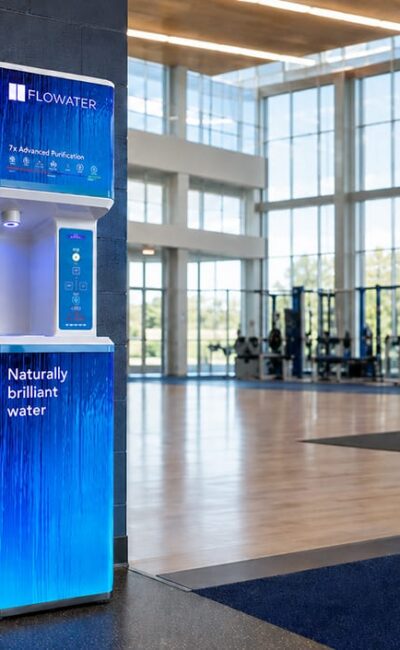
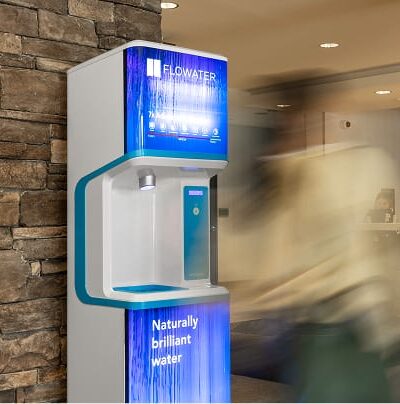
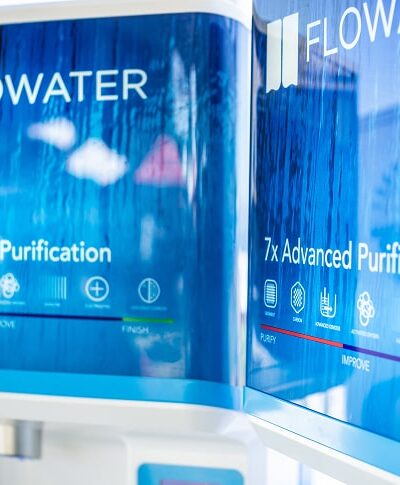
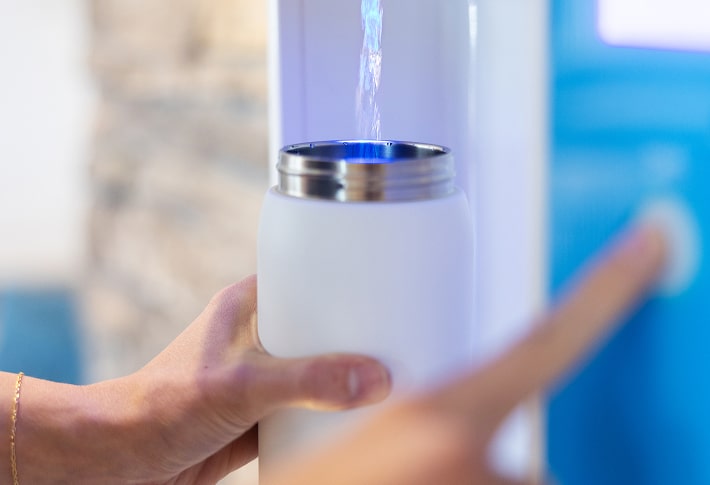
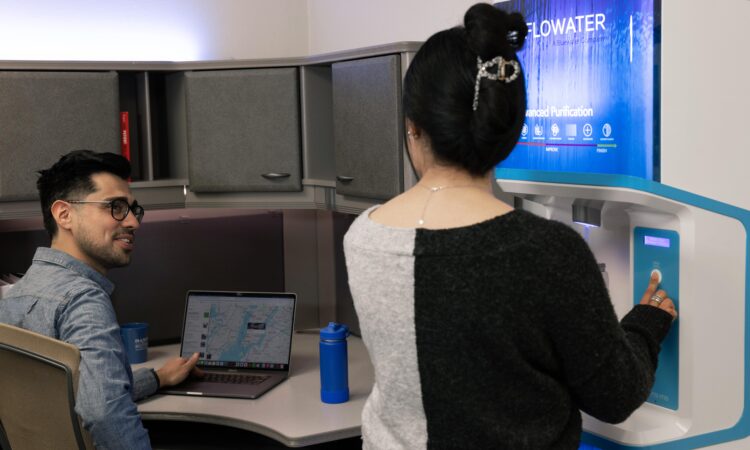
A bottleless water dispenser solves both problems. It connects directly to the building water line, runs incoming water through multi-stage filtration, and dispenses on demand from a sealed system. FloWater’s 7x Advanced Purification removes up to 99.9% of contaminants including lead, microplastics, and PFAS, then enhances the water with electrolytes, alkaline minerals, and oxygen for taste. Employees actually want to drink it. That is the entire point.
What an Effective Office Hydration Setup Looks Like
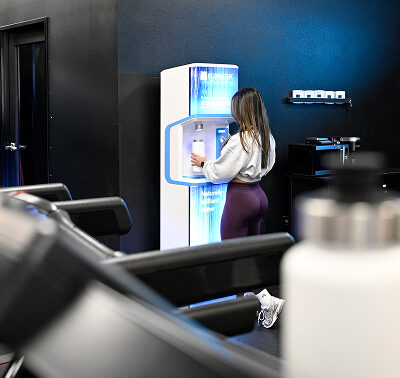
The fix is not complicated. Place dispensers within a 30-second walk of every workstation. Choose units with both chilled and ambient temperature options so employees can fill reusable bottles or grab a quick cup. Ensure the filtration removes the contaminants the EPA flagged in its 2024 PFAS drinking water rule, which most basic carbon filters do not address. Make sure the unit is touchless to support hygiene standards.
If you want help thinking through what your specific office needs, our guide on what to look for in an office water dispenser walks through capacity, filtration, and total cost of ownership.
The Cheapest Productivity Lever You Have
Better office water is one of the few investments that simultaneously improves employee health, reduces absenteeism, supports ESG goals, and pays for itself in productivity gains. The science has been settled for years. The only question is whether your office takes advantage of it.
Ready to see the difference? Request a free FloWater demo and let your team taste why hydration becomes effortless when the water is actually good.