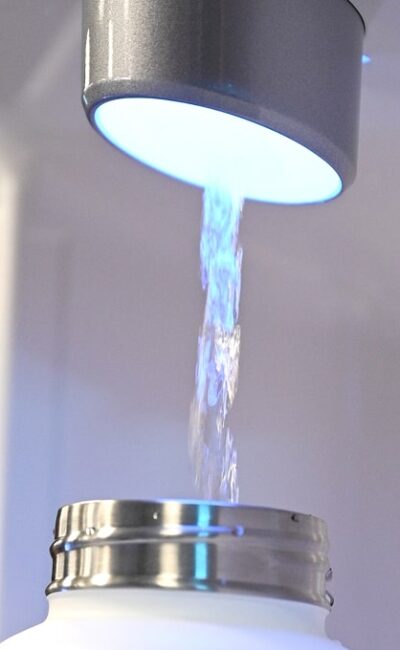
A school district removes lead from student drinking water in two moves. First, it follows the EPA’s 3Ts program, Training, Testing and Taking Action, to find which outlets have a problem and act on them. Second, it puts water purification certified for lead at the places students actually drink and fill bottles. The FloWater Refill Station is built for that second move: its 7x Advanced Purification is certified to NSF/ANSI 53, the standard for reducing health-related contaminants such as lead and PFAS, and it removes up to 99.9% of contaminants, including lead.
Step 1: Train the team and plan the program
The EPA’s 3Ts toolkit starts before any sample is taken. Name who owns the program, write a communication plan for parents and staff, and decide how results will be shared. Districts that skip this step end up testing without a plan for what happens when an outlet fails.
Step 2: Test the outlets students use
The 3Ts toolkit walks a district through a building walkthrough, choosing sampling locations and selecting a laboratory. Lead commonly comes from the plumbing and fixtures inside a building, so a district tests the drinking fountains, bottle fillers, classroom and kitchen taps students and food service actually use, not only the water coming into the building.
Step 3: Take action, short term and permanent
The EPA groups remediation into four parts: an immediate response, short-term control measures, permanent control measures and follow-up sampling. In practice that means:
- Immediate: take any outlet that tests high out of service and tell families what was found.
- Short term: give students another source of safe drinking water while the fix is planned.
- Permanent: replace the fixtures or plumbing behind the problem, and put purification certified for lead at the points where students fill up.
- Follow-up: sample again to confirm the fix worked, and keep testing on a schedule.
School drinking water checklist: what to look for in a lead-reducing water dispenser
| What to check | Why it matters | FloWater Refill Station |
|---|---|---|
| Certification for lead | A lead claim should be backed by a third-party standard | Certified to NSF/ANSI 53 for health-related contaminants including lead and PFAS; also NSF/ANSI 58 and 42 |
| Lead-free materials | The dispenser itself shouldn’t add lead back | NSF/ANSI 372, which verifies lead-free materials in drinking water components |
| What else it removes | Students drink what’s left after purification | Removes up to 99.9% of contaminants, including lead, microplastics and bacteria |
| Heavy daily use | Hallways and cafeterias see lines between classes | Built for high-volume usage in hallways, cafeterias and athletic areas |
| Who keeps it working | Purification only works while filters are current | A local, certified FloWater technician handles scheduled filter replacements and maintenance |
| Disruption to the school day | Construction pulls outlets offline for weeks | No major construction; placement takes about 2 hours |
| Accessibility | Every student needs to reach the water | Designed to meet ADA accessibility standards |
Why purification at the fill point matters
Replacing pipes and fixtures fixes the outlets a district tested. Purification at the fill point protects what students drink every day after that. Pitchers and faucet filters in individual classrooms leave the filter schedule to whichever teacher remembers, and they hold a few cups at a time, not a hallway’s worth of bottles between bells. A FloWater Refill Station on a certified service schedule takes that job off the staff.
How the FloWater Refill Station fits a district’s lead plan
The FloWater Refill Station connects to the school’s existing water line and runs every drop through seven stages. Sediment and carbon stages strip out grit, chlorine and heavy metals. Advanced Osmosis pushes water through a high-efficiency membrane that removes lead, PFAS and microplastics. Activated Oxygen, a chemical-free sanitizer, destroys bacteria inside the stainless steel tanks and internal system between services. The last stages restore minerals and finish with coconut carbon, so the water tastes good enough that students choose it.
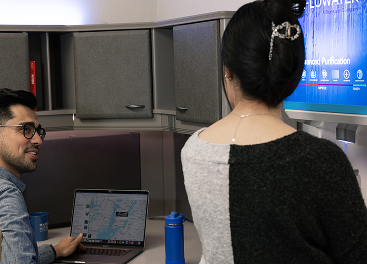
Districts are already seeing that. Albuquerque Public Schools’ Chief Operations Officer describes lines of people filling bottles for the day and talking about the water.
Make the FloWater Refill Station part of your lead plan
Follow the 3Ts to find and fix the problem outlets. Then put a FloWater Refill Station where students fill up, so every bottle is purified to a lead-reduction standard and kept that way by a local technician. Start with a free water report for your school, or request a free trial, on the FloWater K-12 schools page.