A reverse osmosis system is worth it for a family home when there’s something specific in your water you want gone: lead from older plumbing, PFAS (“forever chemicals”), nitrates, or a taste you’ve stopped putting up with. If your water is already in good shape and chlorine taste is the only complaint, a certified carbon filter usually does that job for less. So the real question isn’t whether to get reverse osmosis. It’s which system your household will actually use and keep maintained every day.
When is a reverse osmosis system worth it at home?
Start with what’s in your tap. If you’re on city water, your utility publishes a water quality report every year. The CDC’s advice is to read it before you choose anything. If you’re on a well, test it. A lab report tells you whether you need deep purification or just better taste.
Reverse osmosis earns its place when the report shows dissolved contaminants a carbon filter won’t touch, or when the household drinks enough water that bottles and delivery have become a weekly chore. It’s harder to justify if your water is clean and you mostly want it colder.
What reverse osmosis removes, and what it takes out with it
Reverse osmosis pushes water through a membrane fine enough to hold back dissolved solids, many heavy metals and other chemicals. The CDC notes that reverse osmosis filters remove germs and some types of chemicals. Two things buyers often miss:
- It removes minerals too. Plain RO water can taste flat. Systems that add minerals back after purification taste noticeably different from ones that don’t.
- “RO” isn’t a guarantee. Look for certification against the specific contaminants you care about, not a general claim. The CDC’s guidance is to check the NSF certification on the label to see what a system will remove.
How much water does a home reverse osmosis system send down the drain?
Every RO system produces byproduct water, which carries the contaminants away. EPA’s WaterSense program says a typical point-of-use RO system generates five gallons or more of byproduct water for every gallon it delivers. WaterSense-labeled systems must send 2.3 gallons or less down the drain per gallon. Ask for this number before you buy. It’s on your water bill for as long as you own the system.
What to compare before you buy
| What to check | Why it matters | FloWater Classic / Essential |
|---|---|---|
| Certified contaminant claims | Tells you what’s actually removed, contaminant by contaminant | 7x Advanced Purification removes up to 99.9% of impurities and contaminants found in tap water |
| Byproduct water per gallon | Ongoing water cost and footprint | Roughly two gallons of byproduct water for every gallon purified |
| Minerals after purification | Taste, and whether the family actually drinks it | Adds back magnesium, potassium, sodium and calcium, plus alkalization and trace minerals |
| Cold water on hand | Back-to-back bottle fills without warm water | Classic: 7 gallons held, 2 chilled, about 10 seconds per 24oz bottle. Essential: 3 gallons chilled, about 20 seconds |
| Internal sanitization | Keeps tanks and water lines clean between services | Classic: Activated Oxygen. Essential: Precision Light Wave |
| What the home needs | Avoids a system that can’t be placed where you want it | A water line and a drain within 100 feet, and a three-prong outlet within 6 feet, indoors |
| Upkeep | A neglected filter or membrane quietly stops doing its job | Filters at approximately 12000 gallons or 12 months, whichever comes first. $500 a year covers filters, shipping, a FloWater technician and a maintenance check |
| Price | Owning versus paying monthly forever | Purchase only: Classic $8,195, Essential $6,150 |
Under the sink, or a Refill Station you can see?
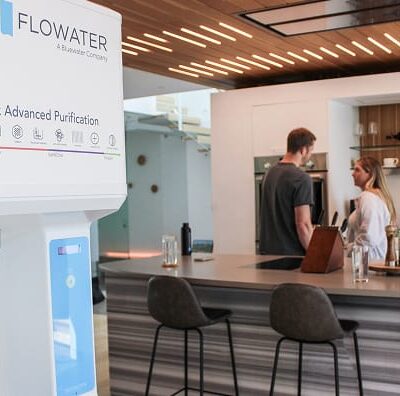
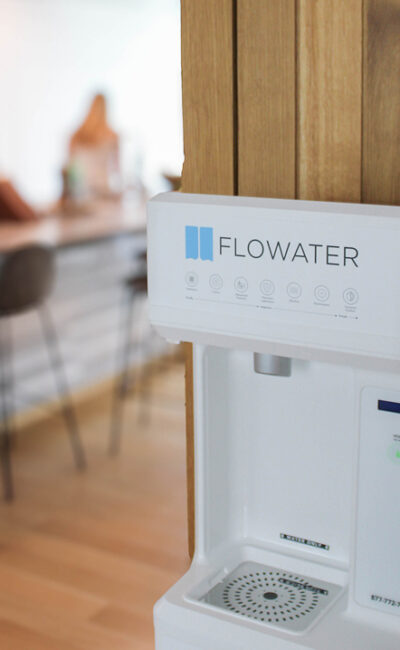
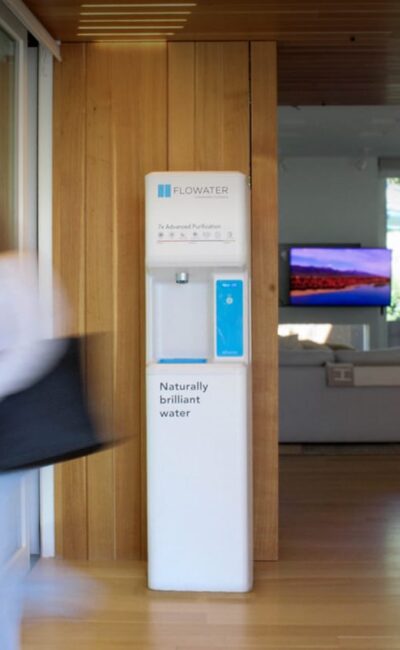
Most home RO systems sit under the kitchen sink and feed a small extra faucet. That works when one person fills one glass at a time. A FloWater Refill Station takes a different approach. It’s a freestanding Refill Station that ties into a water line and a drain, holds purified water chilled and ready, and fills a bottle in seconds. It suits households that go through a lot of water: kids with sports bottles, a home gym, people who entertain.
Inside, the core stage is Advanced Osmosis, FloWater’s version of reverse osmosis, inside seven stages of purification. Minerals and alkalinity go back in at the end, because trust is a taste. If you don’t notice it in a sip, we didn’t do our job.
Before you order: three checks
- Find your water line, drain and outlet. Measure from where it will stand, and check the room stays between 40°F and 104°F, out of direct sun.
- Check your water pressure. FloWater Refill Stations are designed for 50–100 psi.
- On a well? Test first. Well water must be tested, confirmed potable and approved by FloWater before you order. Allow two to three weeks.
See which one fits your kitchen
Compare the FloWater Classic and the FloWater Essential side by side, with placement requirements, on the FloWater In-Home page.